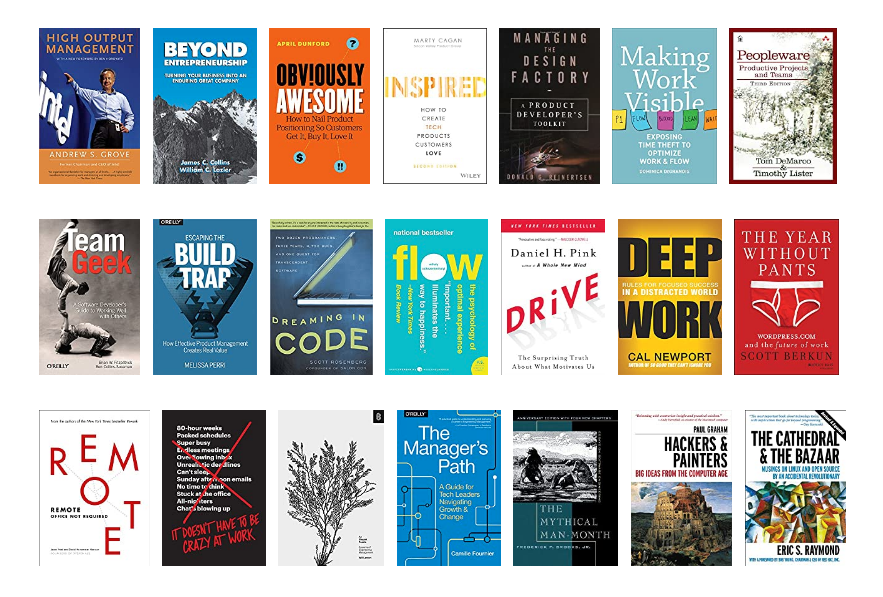
Books

“Facile anti-intellectualism is the order of the day”

Thursday, October 25th, 2007

A book review by Thomas Frank, on a biography of John Kenneth Galbraith.

What astonishes the contemporary reader is, first of all, that a genuine, independent intellectual like Galbraith was permitted to serve in government, let alone become the confidant of presidents. Facile anti-intellectualism is the order of the day now, as even Democrats race to embrace the free-market logic of the Chicagoans. The ”New Industrial State” that the great liberal economist described in 1967 is now Public Enemy No. 1 of financiers and rebel C.E.O.’s determined to, as Tom Peters put it in 1992, blast ”the violent winds of the marketplace into every nook and cranny in the firm.”

Yet reading Parker’s comprehensive account of the 20th century’s economic battles, I can’t help thinking that this ought to be Galbraith’s moment. An old-school scoffer like Galbraith would remind us that all our elected officials have done with their heady incantations of the virtues of privatizing Social Security and the glories of deregulation is resurrect the superstitions of our orthodox ancestors, and trade in our affluent society for a faith-based 19th-century model in which the affluence accrues only to the top.

Or, as I sometimes like to put it, “Economics is too important to be left to economists.” Galbraith would have agreed.

Seemed particularly relevant to me as I have just finished reading books by Galbraith and Frank in the last few months.

Double-header for Friedman

Tuesday, July 24th, 2007

To be honest, I’ve completely ignored the “Thomas Friedman phenomenon” going on in this country. If I had a nickel for every time I saw someone reading The World is Flat on the train…

For some reason, people are in love with globalization and outsourcing as “the great leveler.” I have a different take on this. And precisely because The World is Flat was the most popular book about globalization, I never bothered to read it.

But the other day, someone came over and saw the book in my bookshelf. This person was definitely no fan of globalization. Mind you, I’m no Friedman fan — I only own the book to try to understand what the fuss is about. I haven’t turned a page yet. Yet, this person sat there and stared at this book. And I knew what she was thinking. “Another one of these schmucks? Another cheerleader?”

Well, it’ll take more research and time for me to declare my overall opinion of Friedman.

But today, by pure chance, I encountered two hilarious pieces on Friedman:

One, a cartoon by Tom Tomorrow: M is for Moustache.

Two, a review of The World is Flat by Matt Taibbi of New York Press.

A select excerpt from the review:

On an ideological level, Friedman’s new book is the worst, most boring kind of middlebrow horseshit. If its literary peculiarities could somehow be removed from the equation, The World Is Flat would appear as no more than an unusually long pamphlet replete with the kind of plug-filled, free-trader leg-humping that passes for thought in this country. It is a tale of a man who walks 10 feet in front of his house armed with a late-model Blackberry and comes back home five minutes later to gush to his wife that hospitals now use the internet to outsource the reading of CAT scans. Man flies on planes, observes the wonders of capitalism, says we’re not in Kansas anymore. (He actually says we’re not in Kansas anymore.) That’s the whole plot right there. If the underlying message is all that interests you, read no further, because that’s all there is.

Oh my…

Catching up on the reading list

Friday, March 9th, 2007

Lately, I’ve been very diligent about catching up on my reading.

I have been perpetually delaying a review of Capitalism 3.0 and Dreaming in Code, both of whom deserve it. But I promise one soon. I use Hofstadter’s Rule of Thumb lately for estimating time: however long you think it’s gonna take, double it and add a unit of time. So if you think it’ll take two hours, it’ll really take four days. If you think it’ll take five days, it’ll really take 10 weeks. And so on.

In the meanwhile, I’ve been busy at work — actually working on some cool stuff from a technology standpoint, mainly in the realm of hacking with pieces of the Eclipse Modeling Framework, and its related projects like GMF, RCP, Eclipse Core, etc.

On my commute, I’ve been enjoying reading Making Globalization Work by Stiglitz. Although one of my friends mentioned to me that this book would be quite boring, and for the most part he was right. Not the lofty stuff of Barnes in Capitalism 3.0; but perhaps Stiglitz’s recommendations are much more practical for ways to improve the current system.

The other book I started recently is a long, written interview with John Kenneth Galbraith (much in the style of Socrates) which is entitled, Almost Everyone’s Guide to Economics. What’s amazing is to see Galbraith, this towering (literally) Keynesian economic thinker, speaking in the 70s of the growth of corporate power, the undermining of labor, and the insidious nature of market fundamentalism. And yet, here we are, 30 years later, heeding none of his warnings, and entering into the new “global age” of “The World is Flat”.

Oh yes indeed, I do need to write some reviews very soon.

Finished Dreaming in Code

Friday, February 23rd, 2007

Overall, Dreaming in Code was an interesting book. For programmers who already are obsessed with the classics of software engineering (Mythical Man-Month and friends), you probably won’t learn much new stuff in this book. However, the personal illustrations using OSAF did lead me to some self-evaluation of the work I do. It was also interesting to see the internal workings of an organization which seems to be set up ideally for programmers — a good mission, an open source project, no real deadlines or users in the beginning, design-focused, etc. — and still see it run into the same issues traditional software shops run into.

I’d post a longer review, but I’m headed down to New Orleans today. Will post a longer review when I get back, hopefully also of Capitalism 3.0, whose ideas have been swimming in my head the last few days of commute.  I think they really deserve to be summarized and presented here.

In the meanwhile, I’ve started reading Making Globalization Work by Joseph Stiglitz. This book, in particular, has been a kind of catharsis for most of my armchair ideas in economics, at least so far.  It’s a very strange feeling to read the ex-Chief Economist of the World Bank explaining his own ideas about overcoming the zealousness of “market fundamentalism” prevalent in economic circles, while I, who never studied economics formally, think, “Why would anyone trained in this discipline actually believe that markets are a magic force that work on their own?”  But I guess ideology always trumps rationality.

Dreaming in Code

Sunday, February 11th, 2007

I just picked up a copy of Dreaming in Code from Barnes & Noble. Will probably devour it in the next couple of days.

Finished reading Capitalism 3.0, missed speakers, drank dark beer

Wednesday, January 31st, 2007

I finished reading Capitalism 3.0 a couple of days ago, and it was quite good. I promised a review, so that will be coming shortly. I also noticed that Joseph Stiglitz (ex-Chief Economist for the World Bank) wrote a new book as a follow-up to Globalization and its Discontents which is titled, Making Globalization Work, probably a nice follow-up to Capitalism 3.0.

Today after work I headed to NYU to hear Jimmy Wales give a talk on Wikipedia, but was dismayed to discover that the auditorium was packed and I couldn’t get in.

Then, I noticed that Ralph Nader was at the IFC Theater on 6th Avenue presenting the new documentary made about him called “An Unreasonable Man,” and I was about to go to the 4:55pm showing of that, but tickets sold out for that! Man, what bad luck!

At the end of the day, I ended up meeting Max for drinks at McSorley’s, so that’s not so bad. We talked a bit about Richard Dawkin’s book “The God Delusion,” and whether it’s a good thing that there is a zealous atheist roaming the streets of intellectual-dom.

Currently Reading: Capitalism 3.0

Tuesday, January 16th, 2007

A great book so far, and guess what? You can read it too, since it’s given away for free in a beautifully-produced PDF.

Check it out.

Comments to follow.

Free and DRM-Free E-Books

Tuesday, December 26th, 2006

I got a Nokia 770 for Christmas, to replace my aging and dying Palm V. I’ll probably write more about the 770 and the Palm V later, but suffice it to say that I got the Palm V when it came out, approximately 10 years ago, and have used it ever since. My main uses for it were AvantGo and Vindigo, although in the past I did get other uses out of it as well. I plan to keep the Palm around mainly for the Vindigo features, which I haven’t seen done better anywhere else. (No book on the planet has as much information about NYC as my 8MB Palm V with Vindigo loaded on it.)

I basically got the 770 because of all the great stuff I heard on Teleread and other sites about its use as a portable e-book reader. Indeed, that has been the most pleasant experience on the device. With the Evince PDF viewer and with FBReader (an Open Source ebook reader for a lot of different formats, including HTML, Plucker, and zTxt), I am able to read a ton of stuff while I’m in my commute, and all on a beautiful 800×480 screen that fits in the palm of my hand. (Yes, finally I get to read with serif, anti-aliased fonts!)

I have been overwhelmed with how many free e-books you can find online, thanks in part to efforts by groups like Creative Commons. Here are some good ones:

Feel free to post more in comments!

Calculus Made Easy

Tuesday, April 4th, 2006

I am taking “remedial” Calculus II alongside Numerical Computing this semester. My Calc course is “remedial” in that I haven’t seen any Math over the reals for about 4 years (took Discrete Math and Linear Algebra, which both focus on integers) and this semester I am overloading on real numbers (and even complex numbers) just when I had forgotten they even existed :-)

That said, after spending some time in the humanities (where writing quality is high) and much time in Computer Science (where literacy is defined as being able to read code), coming back to traditional math textbooks has been quite a culture shock. They are so horribly written, it really blows my mind.

So, in response to my horrible Calculus II textbook (published at NYU only for NYU classes, this book features minimal explanation and the maximum amount of notation), I have been using it only for the homework problems and using instead James Stewart’s excellent book, Calculus: Early Transcendentals for rigorous proofs of concepts (because Stewart really does present them nicely), and the lighter but infinitely more illuminating Calculus Made Easy, by Silvanus Thompson.

A somewhat controversial book, Calculus Made Easy chooses to skip the notation-laden explanations of Calculus concepts provided by typical textbooks, and opts instead of a clear, textual elucidation of core concepts in the context of their applications. The philosophy of the book is well-described by this excerpt from the Epilogue.

I think this is wonderful writing, however damning it may be:

It may be confidently assumed that when this tractate Calculus Made Easy falls into the hands of the professional mathematicians, they will (if not too lazy) rise up as one man, and damn it as being a thoroughly bad book. Of that there can be, from their point of view, no possible manner of doubt whatever. It commits several most grievous and deplorable errors.

First, it shows how ridiculously easy most of the operations of the calculus really are.

Secondly, it gives away so many trade secrets. By showing you that what one fool can do, other fools can do also, it lets you see that these mathematical swells, who pride themselves on having mastered such an awfully difficult subject as the calculus, have no such great reason to be puffed up. They like you to think how terribly difficult it is, and don’t want that superstition to be rudely dissipated.

Thirdly, among the dreadful things they will say about “So Easy” is this: that there is an utter failure on the part of the author to demonstrate with rigid and satisfactory completeness the validity of sundry methods which he has presented in simple fashion, and has even dared to use in solving problems! But why should he not? You don’t forbid the use of a watch to every person who does not know how to make one? You don’t object to the musician playing on a violin that he has not himself constructed. You don’t teach the rules of syntax to children until they have already become fluent in the use of speech. It would be equally absurd to require general rigid demonstrations to be expounded to beginners of the calculus.

One thing will the professed mathematicians say about this thoroughly bad and vicious book: that the reason why it is so easy is because the author has left out all the things that are really difficult. And the ghastly fact about this accusation is that — it is true! That is, indeed, why the book has been written — written for the legion of innocents who have hitherto been deterred from acquiring elements of the calculus by the stupid way in which its teaching is almost always presented.

I should note that my Calculus professor is actually quite good, and provides very nice explanations of complex topics, usually beginning with an elucidation of the general idea, and then going on to the formalities. But our assigned textbook is not nearly as clear, and many professors I’ve had in the past have lived entirely inside their constructed notational apparatus.

This reminds me of an old joke I heard awhile back:

A math professor begins his lecture by writing on the blackboard. He only pauses for brief moments of notational explanation, but continues writing and writing, one symbol after the other, for thirty minutes on end. He fills up six blackboards full of derivation, algebraic manipulation, and what have you. At the end, he smiles and draws the open box, indicating the completion of the proof. “Is that clear?” the professor asks. Blank stares all around.

At that point, the professor stops himself. “Oh, no, I believe I’ve made a mistake.” He then looks at the six boards of writing, and begins pointing at certain sections while nodding his head, clearly doing calculations internally. He then paces back and forth across the front of the classroom, with his head bent down and his fist to his chin. For five full minutes, he paces and nods, thinking about the proof just presented.

Then he stops pacing, looks at the students, and says, “Ah, yes, yes. It’s clear.”

Here’s an interesting read, by the way. Came as especially relevant to me, as I “rediscover” math for math’s sake.

My Facebook Profile, and Everyone Else’s

Sunday, December 11th, 2005

-”You need to change your Facebook profile.”
-”Why?”
-”My friends all think it’s weird.”
-”Why?”
-”Because you mention things like ‘corporate power’ on it.”
-”So?”
-”The Facebook is supposed to be fun, you’re supposed to not take it seriously.”

So here, let me propose my new Facebook profile so it can be more amenable to social pressures. I’ve decided that the Facebook has become just as insane as real life, and, unfortunately, just as predictable.

Here is my Facebook profile for the alternate reality in which I care about making Facebook friends:

Relationship: Married to someone of my own sex even though I’m obviously straight. Hah hah, I’m so ironic.

Political Views: Moderate, even though I’m obviously liberal or conservative, but I don’t want to offend anyone. It’s not cool to talk about politics!

Interests: in truth, none whatsoever, so let me just write cute unfunny stuff here, like “Drinking with roomie,” or “duh, The Facebook.”

Favorite Music: A mish-mash of hip-hop, indy rock, and classic rock, because then you’ll know my musical palate isn’t vulgar.

Favorite Movies: here’s my chance to wow everyone with how cultured I am, so I’ll have at least one Coen Brothers movie here, and one or both of Eternal Sunshine of the Spotless Mind or Waking Life.

Favorite Books: I don’t read on my own, because that’s not being social. So here are my choices: (1) my textbooks, because that’s ironic, and dodges the issue; (2) Catcher in the Rye or 1984, because I read that in high school and maybe no one will notice; or, (3) obviously bad books I’ve never read and no one will think I have, like “Treason” by Ann Coulter.

Favorite Quote: Something my roommate said while drunk. Isn’t it funny? Isn’t it? No, really, it’s funny… you had to be there. Or, if I take myself a bit more seriously that I can at least allow a quote, make sure it’s something about postmodernism or from a modern poem that makes minimal sense.

Now that you guys see I am capable of writing a Facebook profile exactly like all the others, perhaps you’ll stop asking me to. In the meanwhile, to make you all more comfortable being apathetic, I’ve censored political content from my interests. I’ve also deleted references to a comedian you’ve never heard of from my quotes section. If you’re lucky, I’ll promptly replace them with Jon Stewart quotes. (Politics is cool, apparently, only if it’s on TV.)